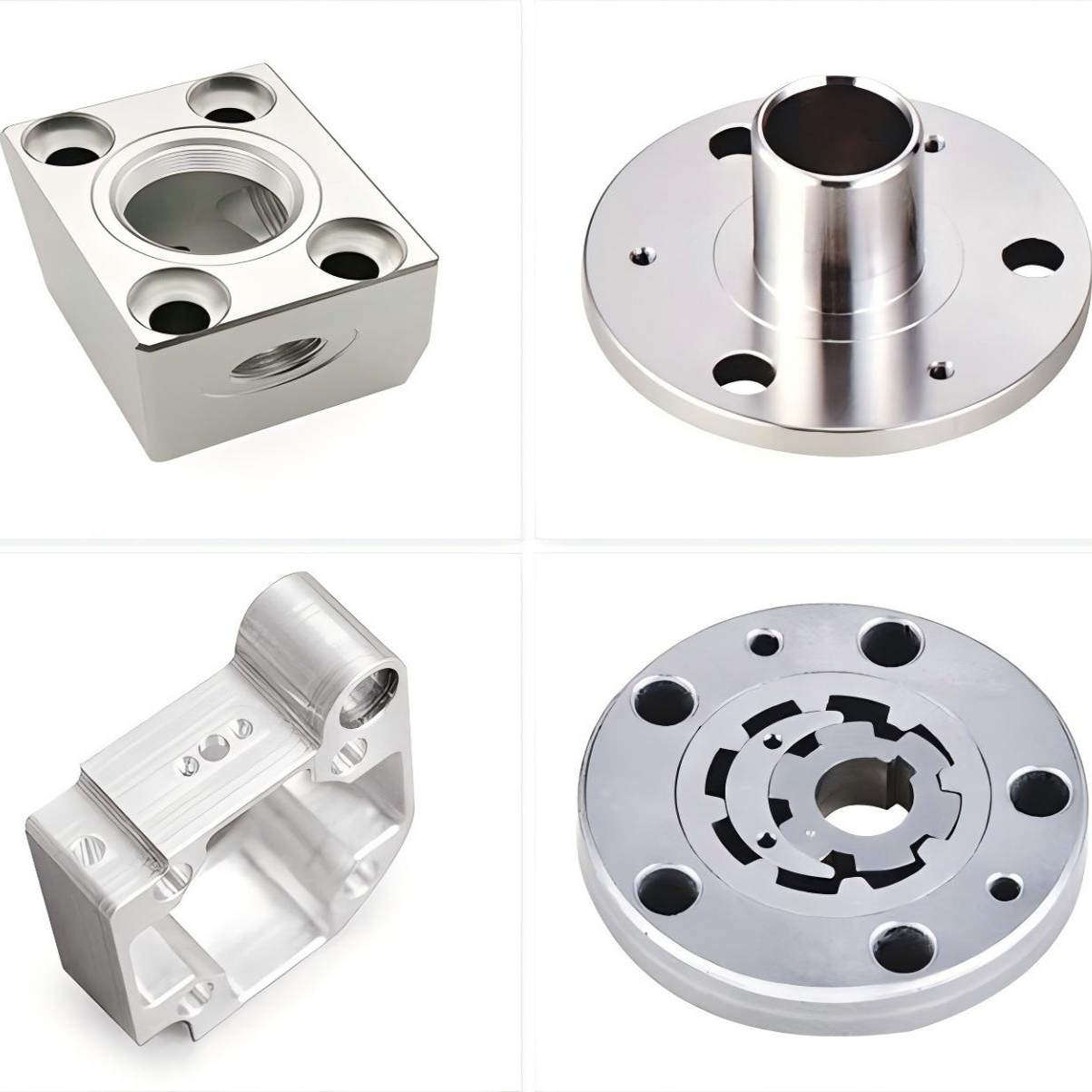
CNC machining has become one of the most important manufacturing technologies for producing accurate and reliable mechanical components. From aluminum parts and stainless steel components to brass fittings, shafts, housings, and custom industrial parts, CNC machining can provide efficient and repeatable production for a wide range of industries.custom CNC machining services
For companies looking for custom CNC machining services, understanding the machining process, materials, capabilities, tolerances, and applications can help you choose the right manufacturing solution for your project.
What Is CNC Machining?
CNC stands for Computer Numerical Control. CNC machining is a manufacturing process in which computer-controlled machines remove material from a workpiece to create a component according to a digital design.
Unlike conventional manual machining, CNC machines can follow programmed tool paths with a high degree of consistency. The process usually starts with a 2D drawing, 3D CAD model, or technical specification. The design is converted into machine instructions that control cutting tools, spindle speed, feed rate, and tool movement.
CNC machining is widely used because it can produce complex shapes, accurate dimensions, holes, threads, grooves, slots, and other detailed features.
How Does CNC Machining Work?
A typical CNC machining process involves several important steps.
1. CAD Design and Engineering
The process usually begins with a technical drawing or 3D CAD model. The design defines important information such as dimensions, tolerances, hole locations, threads, surface requirements, and material specifications.
Customers can provide CAD files or technical drawings to a CNC machining supplier for production evaluation.
2. Material Selection
The appropriate material is selected according to the application requirements.
Common CNC machining materials include:
- Aluminum
- Stainless steel
- Carbon steel
- Brass
- Copper
- Titanium
- Acrylic
- Engineering plastics
Material selection can affect strength, weight, corrosion resistance, machinability, appearance, and cost.
3. CNC Programming
The CAD model is converted into machining instructions. Engineers determine the appropriate cutting tools, machining sequence, spindle speed, feed rate, and tool paths.
Proper programming is particularly important when manufacturing parts with complex geometries or tight dimensional requirements.
4. CNC Machining
The workpiece is securely positioned on a CNC machine, and cutting tools remove material according to the programmed instructions.
Depending on the component design, manufacturers may use CNC turning, CNC milling, drilling, tapping, grinding, or multi-axis machining.
5. Quality Inspection
After machining, the finished components are inspected to verify dimensions and quality.
Inspection may include dimensional measurement, thread inspection, surface inspection, and other quality-control procedures depending on the requirements of the project.
CNC Turning vs. CNC Milling
Two of the most common CNC machining processes are CNC turning and CNC milling.
CNC Turning
CNC turning is particularly suitable for cylindrical or rotational components.
Typical CNC turned parts include:
- Shafts
- Bushings
- Pins
- Sleeves
- Connectors
- Threaded components
- Cylindrical fittings
During turning, the workpiece rotates while a cutting tool removes material from its surface.
CNC Milling
CNC milling is suitable for components with flat surfaces, pockets, slots, holes, contours, and more complex geometries.
Common CNC milled parts include:
- Machine brackets
- Flanges
- Housings
- Plates
- Fixtures
- Mechanical blocks
- Custom industrial components
CNC milling can also be combined with drilling, tapping, and other machining operations.
What Materials Can Be CNC Machined?
One of the major advantages of CNC machining is its compatibility with a wide range of materials.
Aluminum CNC Machining
Aluminum is lightweight, machinable, and widely used in industrial equipment, electronics, automation, transportation, and mechanical components.
Custom aluminum CNC machining is commonly selected when low weight, good machinability, and corrosion resistance are important.
Stainless Steel CNC Machining
Stainless steel provides excellent strength and corrosion resistance. It is commonly used for industrial machinery, medical equipment, food-processing equipment, fittings, and other demanding applications.
Brass and Copper CNC Parts
Brass and copper are useful materials for components requiring good electrical conductivity, thermal performance, or machinability.
They are often used for connectors, fittings, electrical components, and precision mechanical parts.
Engineering Plastics
CNC machining can also be used to manufacture components from various engineering plastics and acrylic materials.
Plastic CNC parts can be useful when low weight, electrical insulation, chemical resistance, or specific mechanical properties are required.
Advantages of Custom CNC Machining
High Dimensional Accuracy
CNC machining allows manufacturers to produce components according to defined dimensions and tolerances. This is particularly important for mechanical parts that need to fit with other components.
Repeatable Production
Once a CNC machining program has been developed and verified, the same process can be repeated for multiple parts, helping maintain consistent production quality.
Complex Geometries
CNC machines can manufacture components with holes, pockets, threads, curves, grooves, and other complex features that may be difficult to produce using conventional methods.
Flexible Customization
CNC machining is suitable for both prototypes and production parts. Customers can provide their own drawings or CAD models and request parts according to specific requirements.
Wide Material Selection
From aluminum and stainless steel to brass, copper, steel, titanium, and engineering plastics, CNC machining supports many different materials.
CNC Machining for Prototypes and Production
CNC machining is not limited to large-volume manufacturing.
It can also be an effective solution for rapid prototypes and small-batch production.
For prototype development, CNC machining allows engineers to manufacture functional parts and evaluate dimensions, assembly, mechanical performance, and design before committing to larger-scale production.
For production applications, CNC machining can provide repeatable manufacturing for customized components.
This makes CNC machining suitable for projects ranging from a single prototype to larger production quantities.
Applications of CNC Machined Parts
CNC machined components are used across many industries.
Automotive
CNC machining is used to produce brackets, shafts, housings, connectors, fixtures, and other automotive components.
Industrial Automation
Automation equipment often requires precision mechanical components with specific dimensions and tolerances. CNC machining can produce custom parts for automated machinery and production systems.
Electronics
CNC machining can be used to manufacture aluminum housings, mounting components, brackets, connectors, and other electronic equipment parts.
Medical Equipment
Precision-machined components are used in various medical devices and equipment where dimensional consistency and material selection are important.
Aerospace
Aerospace applications can require lightweight, strong, and accurately manufactured components. CNC machining is widely used for producing complex metal parts.
Robotics
Robotic systems often require custom shafts, brackets, housings, adapters, and other mechanical components. CNC machining provides flexibility for producing these customized parts.
How to Choose a CNC Machining Supplier
When selecting a custom CNC machining manufacturer, several factors should be considered.
Machining Capability
Check whether the supplier provides the processes required for your project, such as CNC turning, CNC milling, drilling, tapping, or multi-axis machining.
Material Options
Make sure the supplier can work with your required material and provide appropriate material specifications.
Quality Control
Ask about dimensional inspection, production quality control, and inspection procedures.
Customization
A capable CNC machining supplier should be able to work from technical drawings, CAD files, or samples and provide a manufacturing solution based on the actual design.
Surface Finishing
Depending on the application, CNC parts may require additional finishing such as anodizing, polishing, plating, brushing, or other treatments.
Custom CNC Machining From Drawings and Samples
For many engineering projects, customers already have a technical drawing, CAD file, or physical sample.
A professional CNC machining supplier can review the design and determine an appropriate machining process, material, and production method.
At Floryatek, we provide custom CNC machining solutions for precision metal and plastic components. Our services can include CNC turning, CNC milling, drilling, tapping, and related machining processes.
Customers can provide drawings, CAD files, or samples for customized production requirements.
Conclusion
CNC machining provides a flexible and reliable solution for manufacturing precision mechanical components. With CNC turning, CNC milling, multiple material options, and customized production capabilities, CNC machining can support projects ranging from prototypes to production parts.
Whether you need custom aluminum parts, stainless steel components, brass parts, CNC turned shafts, CNC milled components, or other precision mechanical parts, choosing the right machining process and manufacturing partner is an important part of achieving consistent results.
If you are looking for custom CNC machining services, you can provide your drawings, CAD files, or samples to discuss your project requirements and receive a suitable machining solution.